 Get Appointment
Morphea Treatment
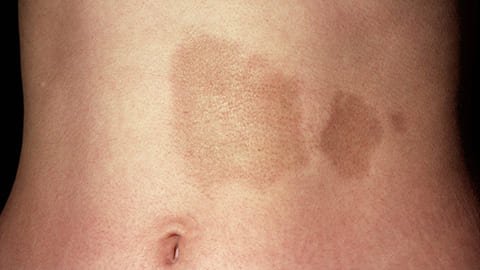
Morphea, also known as localized scleroderma, is a rare skin condition characterized by the development of thickened, hardened areas of skin. This condition is considered a subtype of scleroderma, a group of autoimmune disorders that affect the connective tissues.
Unlike systemic scleroderma, which can affect internal organs, morphea primarily involves the skin and underlying tissues. Morphea typically presents as one or more patches of hardened, discolored skin. The affected skin may be lighter or darker than the surrounding skin, and it often has a shiny appearance. The patches are usually oval or linear in shape.
In addition to skin changes, individuals with morphea may experience symptoms such as itching, pain, or muscle weakness in the affected area. The condition can affect any part of the body, and the severity of symptoms can vary. Morphea is classified into different subtypes based on the extent and location of skin involvement. These subtypes include plaque morphea, linear morphea, generalized morphea, and pansclerotic morphea.
The exact cause of morphea is not well understood, but it is believed to involve an abnormal immune response that leads to inflammation and excessive collagen production in the skin. Genetic and environmental factors may also play a role. Diagnosis is typically based on clinical examination and may be supported by skin biopsies to examine affected tissues under a microscope. Imaging studies such as MRI or ultrasound may be used to assess the depth of tissue involvement.
Leave a comment